
Review · BEER TASTINGS
Salento: Coffee Master Roasting, Brewing and Tasting Tour
The most useful part of this Salento coffee experience is the chance to handle the coffee yourself. You do not just watch a roaster work. Under supervision, you roast a 2 kg batch of specialty coffee, then brew coffees with four different pour-over devices and compare the results.
I like the clear bean-to-cup path and the relaxed, personal teaching style. I also like that the experience stays small, with no more than 10 people, and that the owner has taken time to help visitors with home coffee machines. The main drawback is that the session is serious about tasting, so strong perfume, smoking, alcohol, or arriving hungry can spoil it for you.
Key points
- Roast your own 2 kg batch: Learn how green beans change through heat, color, aroma, and chemistry.
- Compare four pour-over brewers: See how equipment and technique affect the cup.
- Taste five specialty coffees: Explore washed, extended-fermentation, and natural processing.
- Learn the language of coffee: Practice identifying acidity, sweetness, body, and aftertaste.
- Small and personal: Groups are limited to 10, with instruction in English or Spanish.
- Plan your arrival carefully: Eat first, avoid strong scents, and confirm accessibility details before booking.
From green bean to roasted coffee in two hours
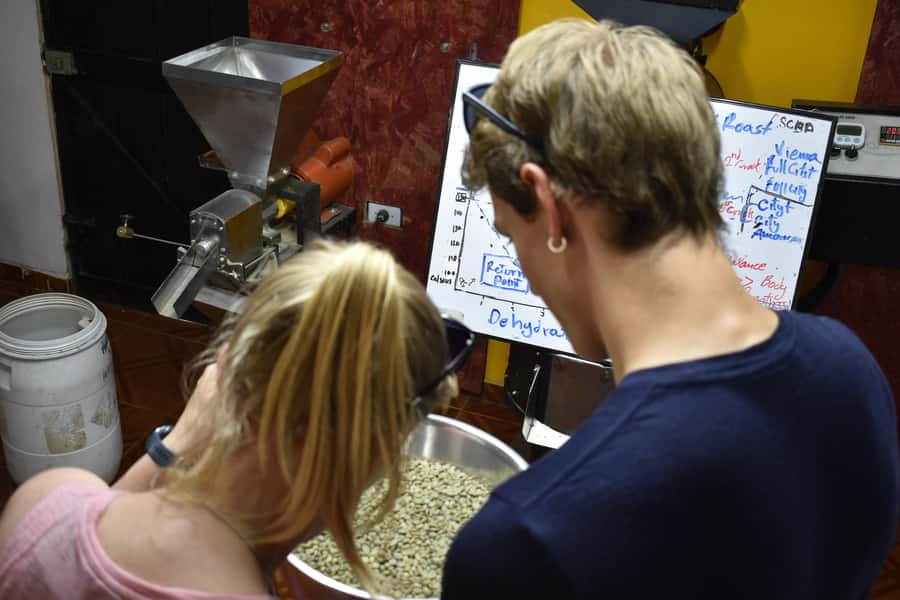
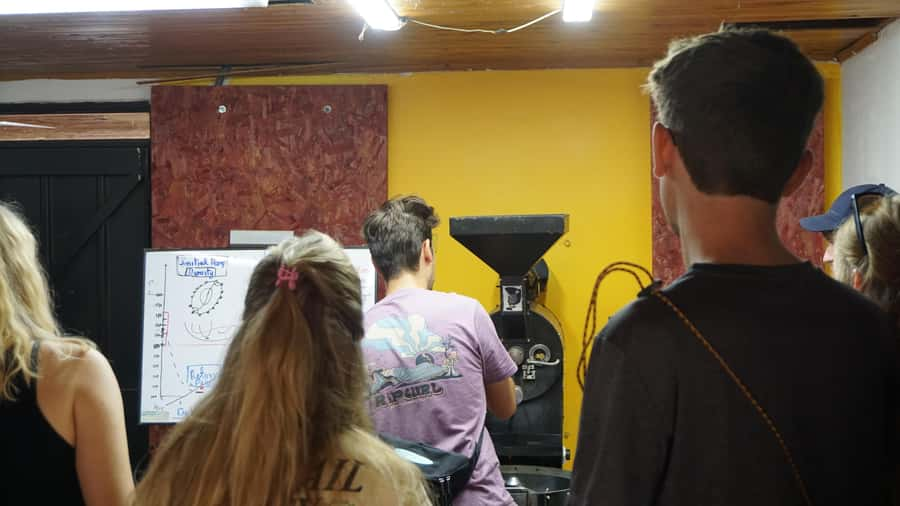
Coffee Cupping Micro Roasters gives you a compact lesson in what happens between a green coffee bean and your morning cup. The session begins with the drum roaster, the large piece of equipment that controls the first major transformation.
An expert technician explains how heat moves through the machine. You learn the difference between conduction, when heat passes through contact with a hot surface, and convection, when hot air moves around the beans. These ideas can sound technical, but they matter because roast development affects aroma, flavor, body, and bitterness.
You also hear about the physical and chemical changes inside the bean. Green coffee is hard and pale. Roasting changes its structure, releases aroma, and brings out the characteristics that make one coffee taste different from another. This is the point where the experience moves beyond a simple farm visit. You are learning why roasting choices matter.
The session also covers roast profiles and coffee origin. A roast profile is the pattern of heat and time used to bring a coffee to its finished state. Origin matters because the bean’s growing conditions and variety can shape what you taste later. The tour does not treat coffee as one generic drink. It asks you to notice how the bean and the roast work together.
More Beer Tastings in the world:
- Bruges: Guided Tour & Boat Ride with Optional Beer Tasting
★ 4.4 · 3,894 reviews - Prague: Pilsner Urquell Experience & Beer Tasting
★ 4.7 · 3,480 reviews - Cologne: Brewery Tour with 3 Kölsch Beer Tastings
★ 4.7 · 3,108 reviews
Your turn at the drum roaster
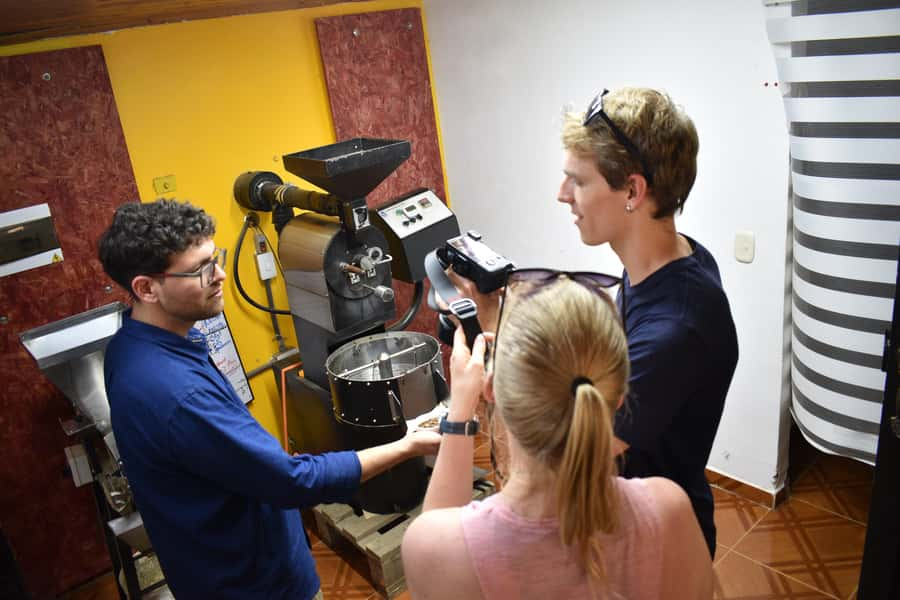
The hands-on roasting is the unusual part. You get the chance to roast a 2 kg batch of specialty coffee with expert supervision. That gives you a practical sense of the process, rather than leaving you with a demonstration you quickly forget.
You should expect guidance rather than total control. The roaster and technician explain what is happening while you take part. This is useful for first-time coffee drinkers who want a plain explanation, but it also gives serious home brewers a closer look at professional equipment.
The lesson is especially helpful if you have ever wondered why two bags of beans from the same country can taste so different. Roast level, heat transfer, origin, and processing all affect the final drink. Once you understand that, the coffee in your cup becomes easier to assess.
The roasting stage may be less appealing if you want a quiet plantation walk or a broad agricultural tour. This is an indoor, equipment-focused experience centered on roasting and brewing. You will gain more technical understanding than scenery.
Four brewing methods, five coffees
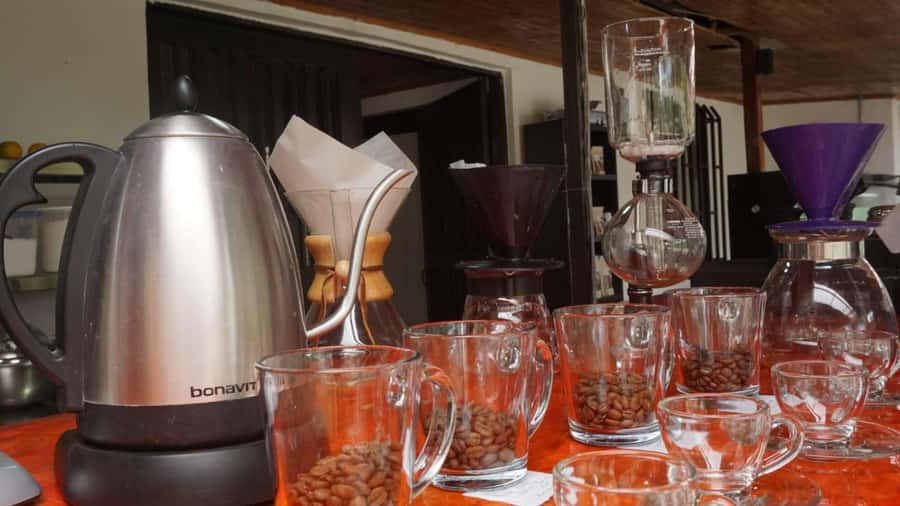
After roasting, the focus shifts from heat to water. You work with four different pour-over coffee makers and prepare five specialty coffees for sampling. This part gives you a direct comparison of how brewing methods can change the drink.
Pour-over brewing requires control of the water and its contact with the ground coffee. Small changes in method can affect the strength, clarity, aroma, and texture of the cup. You will not simply receive five samples at a table. The aim is to prepare them yourself and see how each method behaves.
The five coffees also introduce different processing methods:
- Full washed coffee: The fruit is removed from the coffee cherry before drying. This style is often useful for noticing clean flavor differences.
- Extended fermentation coffee: The beans spend longer in fermentation, which can create a different aroma and flavor profile.
- Natural coffee: The coffee cherry dries around the bean, giving you another way to compare fruit character and texture.
The important point is not to memorize these labels. It is to taste the effect. You may notice one coffee feels brighter, another sweeter, and another fuller in the mouth. The instructor helps you connect those sensations to processing and brewing.
I like this section because it gives you a method for tasting instead of asking you to accept someone else’s description. You can decide which coffee suits you. You may even leave with a better idea of what to look for when buying beans at home.
Learning to taste acidity, sweetness, body, and aftertaste
Coffee tasting can feel intimidating when people use too many fancy words. This experience keeps the basic targets clear: acidity, sweetness, body, and aftertaste.
Acidity does not mean the coffee has gone bad. It describes a lively quality that may remind you of fruit or citrus. Sweetness is the pleasant sugar-like character you may notice in the cup. Body describes how the coffee feels in your mouth, from light to heavier. Aftertaste is what remains once you swallow.
The guided tasting helps you separate these elements. Instead of saying only that you like or dislike a coffee, you can ask why. Is it bright? Is it heavy? Does the flavor fade quickly, or stay with you?
This is also where the aroma rules matter. Eat a good meal before arriving, but avoid strong deodorant, perfume, skin lotion, or powerful mosquito repellent. Smoking and alcohol can interfere with your sense of smell, and chewing gum is not allowed. Those rules may feel fussy until you realize that aroma is a large part of coffee tasting.
Do not arrive on an empty stomach. Five specialty coffees may not sound like much, but tasting on an empty stomach is unpleasant and can affect how you judge the drinks. A proper meal beforehand is one of the simplest ways to improve the session.
More coffee stops in the world:
- Cartagena Coffee Masterclass: Artisanal Roasting and Brewing
★ 5.0 · 3 reviews - Buon Ma Thuot: Specialty Coffee Tour and Brewing Experience
★ 5.0 · 2 reviews
A personal teaching style, not a crowded lecture
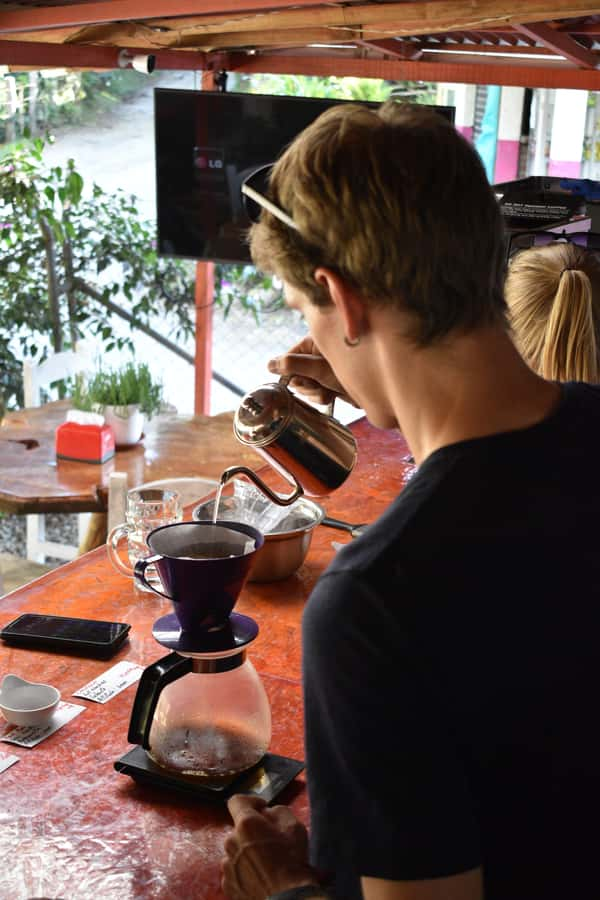
The group limit is 10 people, which makes a difference during the roasting and brewing work. You have more room to ask questions and handle the equipment than you would in a large demonstration.
The owner leads the experience, and the teaching style is relaxed and individualized. One visitor received help using a home coffee machine, a useful touch if you own equipment that still seems more complicated than it should be. That kind of practical question fits this activity well.
The owner’s passion for the work is part of the appeal. You are not only hearing a fixed script about coffee. You can use the time to ask about roasting, brewing, aroma notes, or the local coffee culture. English and Spanish instruction are available.
The small group also makes this a good choice for people who prefer conversation over a fast-moving sightseeing stop. It may be less suitable if you want to remain passive. You will get more from the two hours if you take part, smell the coffee, taste carefully, and ask questions.
How the $52 price measures up
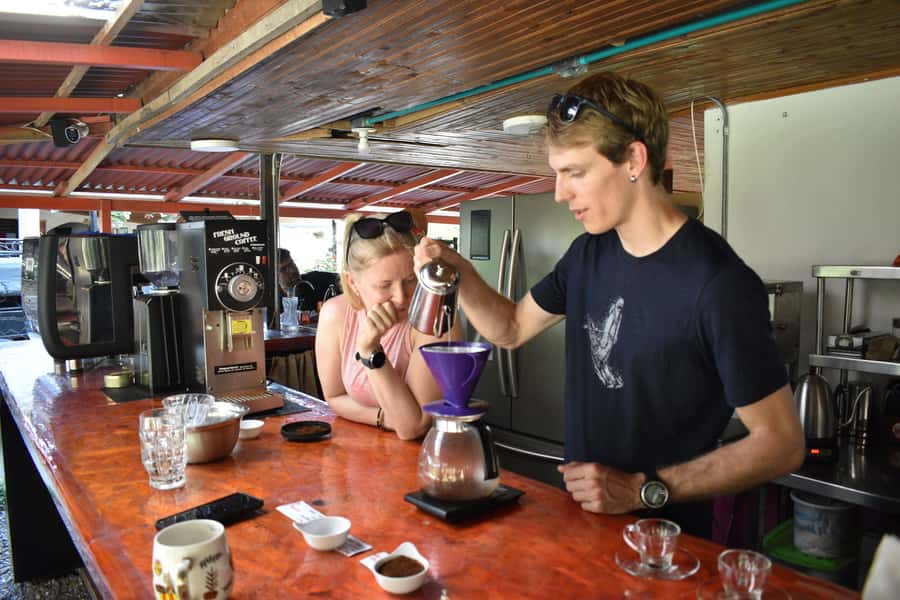
At $52 per person, this is not the cheapest way to drink coffee in Salento. You could buy several cups for less. The value comes from the combination of instruction, equipment access, roasting, brewing, and guided tasting.
You are paying for a two-hour workshop with master roasters, a roasting demonstration, the chance to roast a 2 kg batch under supervision, five coffees, four brewing methods, beverages, and insurance. The experience also gives you skills you can use after the trip. If you already brew at home, the practical advice may be worth more to you than another standard coffee stop.
The price makes less sense if your main goal is a plantation walk, a long farm tour, or a large meal. Transportation to the plantation is not included, and meals are not included. You should also check the meeting point and arrange your own way there. One useful detail is that the coffee farm is easy to reach from Salento, so you do not need to pay for an expensive full transport package simply to attend the workshop.
The short duration keeps the cost manageable. Two hours is long enough to learn and taste without taking over your day. You can pair it with other Salento plans, but leave enough time to arrive calmly rather than rushing in from another activity.
Who will enjoy this coffee workshop most
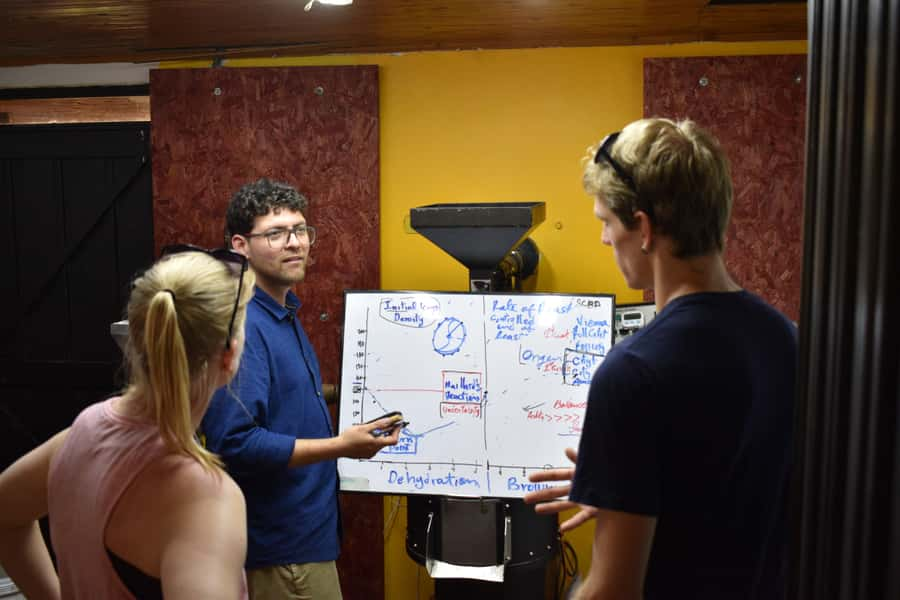
I would choose this experience for a coffee drinker who wants to understand what is in the cup. It suits people who enjoy practical demonstrations, small groups, and tasting several styles side by side.
It is particularly good for:
- Home brewers who want help with technique or equipment.
- Coffee fans curious about roasting profiles and processing.
- Visitors who prefer a focused workshop to a long organized excursion.
- Couples or small groups who enjoy talking with the person who produces the coffee.
- People who want a local activity that fits into a two-hour window.
The age limit is 15 and older. Children under 15 are not accepted, and the tasting format is better suited to older teens and adults who can pay attention to aroma and flavor.
People with back problems should also take care. The experience is not suitable for people with back problems. The information provided also says that the activity is wheelchair accessible but separately lists wheelchair users as not suitable. That is a clear conflict. If you use a wheelchair, contact Coffee Cupping Micro Roasters before paying and ask about the exact entrance, seating, roaster access, and restroom arrangements.
Practical preparation before you arrive
Eat beforehand, but do not try to overpower the coffee with a strong meal right before the session. The key is simply not to arrive hungry.
Avoid perfume, strong deodorant, skin lotion, and strong mosquito repellent. Coffee tasting depends on smell, so these scents can distract you and the people around you. Do not smoke before the activity, and skip alcohol beforehand. Smoking and alcohol can dull your ability to notice aroma.
Wear proper footwear. Bare feet are not allowed, and sensible shoes are a good idea around roasting equipment. Smoking, alcohol and drugs, and chewing gum are also prohibited during the experience.
The session is offered in English and Spanish. If you care about technical detail, confirm the language you want when booking. The group is limited to 10, but a small group does not automatically mean private instruction, so be ready to share the equipment and tasting time.
Free cancellation is available up to 24 hours before the experience for a full refund. You can also reserve now and pay later, which helps if your Salento schedule is still changing.
Is the tasting too technical for casual coffee drinkers?
No, but it is more technical than a basic coffee stop. You will hear terms such as conduction, convection, roasting profile, fermentation, acidity, body, and aftertaste. The value is that these ideas are tied to actual beans and drinks.
The experience does not require you to arrive with specialist knowledge. The owner and technician guide you through the stages, and the hands-on format makes the information easier to follow. You can ask simple questions, including questions about a home machine or brewing method.
Casual drinkers should know that the focus is not on sweetened coffee drinks or a large meal. It is on the taste of specialty coffee itself. If you prefer coffee as a quick caffeine stop, this may feel like too much detail. If you want to learn why coffee tastes the way it does, the detail is the point.
My take on the overall experience
I like the way this workshop links every stage. You learn about the green bean, take part in roasting, prepare coffee with several brewers, and then taste the results. That sequence gives the session a clear purpose.
The most highly praised qualities are the owner’s warm, engaging approach, the depth of the roasting and brewing lesson, and the relaxed feel of the visit. The owner’s name is not provided, but the teaching is personal enough that you can ask for help with your own brewing problems, not just listen to general facts.
I also like the local value. You do not need to buy a full day tour with transport, meals, and unrelated stops. For $52, you get a concentrated coffee lesson near Salento. That is a fair price if coffee is part of your travel interest.
The limits are equally clear. It is only two hours, so you will not get a broad study of every coffee-growing stage or a long agricultural tour. Transportation and meals are extra. Accessibility information needs confirmation if that affects you, and people under 15 or with back problems should not book.
Should you book the Salento coffee roasting tour?
Book it if you want to do more than drink coffee. You will roast a real batch, work with four pour-over methods, taste five coffees, and learn how processing changes flavor. The small group and personal owner-led approach make it a better fit for curious coffee drinkers than for people seeking a passive demonstration.
I would skip it if you dislike tasting coffee without strong flavors added, need a family activity for young children, or want a scenic farm tour with meals and transport included. For everyone else, this is a focused and useful way to spend two hours near Salento, especially if you plan to improve your coffee routine when you get home.
FAQ
How long does the coffee experience last?
The experience lasts two hours.
How much does the tour cost?
The price is $52 per person.
What coffee activities are included?
You receive a guided tasting session, a hands-on brewing workshop, a roasting demonstration by master roasters, beverages, and insurance. You also roast a 2 kg batch under supervision and prepare five coffees using four pour-over brewers.
Which languages are available?
Instruction is available in English and Spanish.
How many people can join the group?
The group is limited to 10 participants.
Is transportation to the plantation included?
No. Transportation to the plantation is not included, and meals are also not included.
What should I avoid before the tasting?
Eat a good meal before arriving, but avoid strong deodorants, perfumes, skin lotions, and strong mosquito repellents. Try not to smoke or drink alcohol before the session. Smoking, alcohol and drugs, chewing gum, and bare feet are not allowed during the activity.
Newest beer tours in the world
- Würzburg: Unique Brewery Tour with Beer Tasting★ 5.0 · 2 reviews
- Zurich Beer Tour – tasting tour with a local beer expert★ 5.0 · 3 reviews
- Wroclaw: Guided Tour & Beer Tasting (2 hours)★ 3.4 · 6 reviews
- Zaanse Schans: Brewery HOOP Tour and Tasting★ 3.4 · 4 reviews
- Warstein: Warsteiner World Brewery Tour★ 4.6 · 3 reviews
- Warsaw: Guided Craft Beer Tour with a Friendly Guide★ 5.0 · 4 reviews
- Vilnius: Private Beer Tour & Tasting★ 4.7 · 3 reviews
- DAILY Beer Tasting Private Guided Tour at Best Warsaw Pubs★ 3.9 · 8 reviews
Beer Tastings, compared.
Guided Tour & Boat Ride with Optional Beer Tasting
Read our review →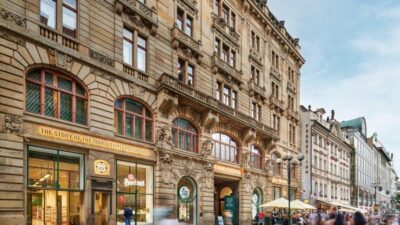
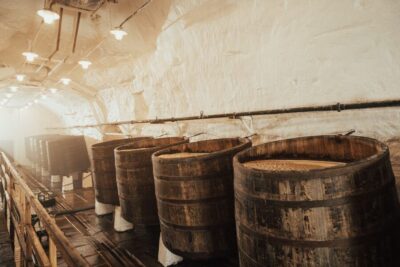
Pilsner Urquell Brewery Tour with Beer Tasting
Read our review →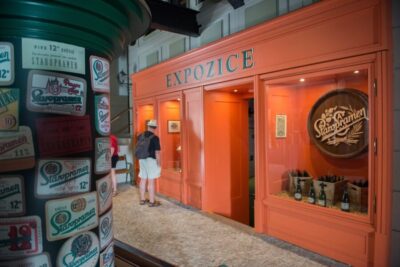
Staropramem Brewery Self-Guided Tour with Tasting
Read our review →
Hidden Brewery Caverns Tour in Cincinnati with Beer Tasting
Read our review →
Browse the lists this tour appears in